Showing posts with label Research. Show all posts

Tuesday

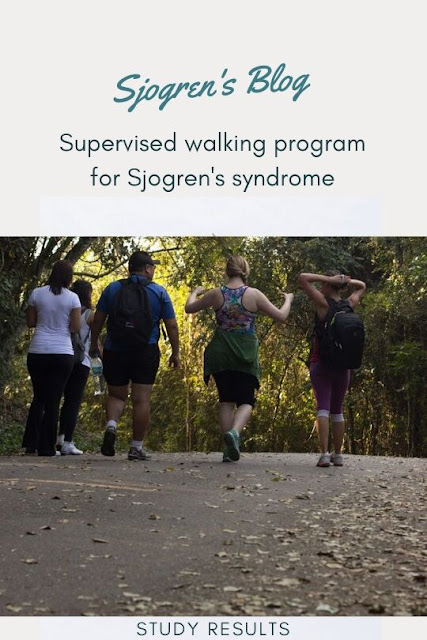
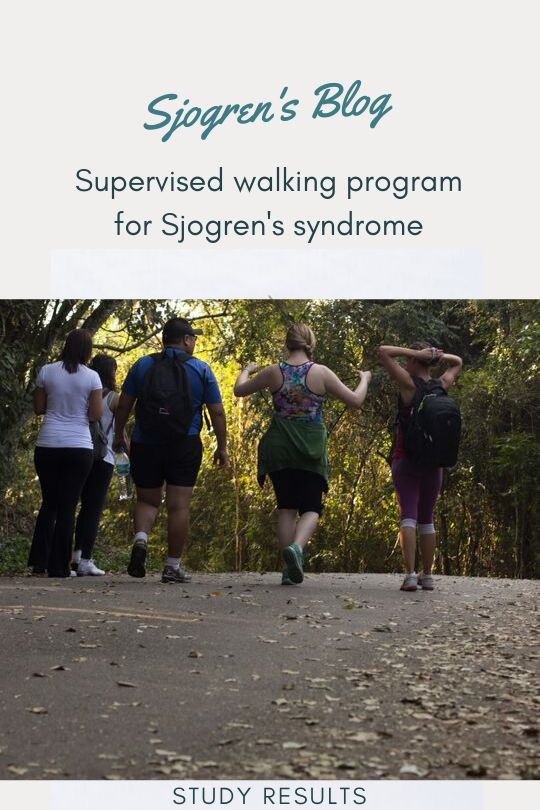
Supervised walking program for Sjogren's syndrome

walking program for Sjogren's syndrome
Objective

The aim of this study was to evaluate the safety and effectiveness of a supervised walking program in women with primary Sjögren’s syndrome (pSS).

Methods

Forty-five sedentary women fulfilling the American European Consensus Criteria for pSS were randomly placed into one of two training groups: 23 were placed in TG (Target Group)and 22 in CG (Control Group) 
The following were assessed:
Patients in the TG joined in supervised walking three times a week for 16 weeks.
The patients of the CG were instructed not to do any kind of regular physical exercise for the 16 weeks. 

Results

After 16 weeks, the average changes were higher in the TG than in the CG.

Improved cardiorespiratory fitness was associated with improvements in fatigue scores and physical components of quality of life. Cardiorespiratory fitness refers to the ability of the circulatory and respiratory systems to supply oxygen to skeletal muscles during sustained physical activity. Improved fatigue scores were associated with reduced depression and improvements in the physical and mental components of SF-36.

Overall, 95.4% of patients in the TG rated themselves as clinically improved versus 62% of the patients in the CG. There was no flare in disease activity and no serious adverse events with exercise.

Conclusions

This supervised walking program was demonstrated to be feasible and safe with improvements in cardiorespiratory fitness, exercise tolerance, fatigue, and patient perception of improvement in pSS patients.
If you want to do this walking program yourself this is how it was done: 
Each training session was preceded by a warm-up period, where patients were instructed to walk freely and slowly for 5 minutes, followed by 20 to 50 minutes of effective walking when they were instructed to maintain their paces to achieve the target heart rate and ending by a cold-up period for 5 minutes (similar to warm-up period).
The exercise prescription was based on the heart rate at the anaerobic threshold determined at the initial assessment. The increment of intensity exercise was based on time: 30 in the first 2 weeks, adding 5 minutes per week until eighth week, completing 60 minutes, which remains until the end.
Supervised walking improves cardiorespiratory fitness, exercise tolerance, and fatigue in women with primary Sjögren's syndrome: a randomized-controlled trial.

Friday

New Sjogren's study: Epigenetically quantified immune cells in salivary glands of Sjögren’s syndrome patients


New study of Epigenetically quantified immune cells in salivary glands of Sjögren’s syndrome patients


Sofie L.M. Blokland, Fréderique M. van Vliet-Moret, Maarten R. Hillen, Aridaman Pandit, Roel Goldschmeding, Aike A. Kruize, Gerben Bouma, André van Maurik, Sven Olek, Ulrich Hoffmueller, Joel A.G. van Roon, Timothy R.D.J. Radstake, Epigenetically quantified immune cells in salivary glands of Sjögren’s syndrome patients: a novel tool that detects robust correlations of T follicular helper cells with immunopathology, Rheumatology, July 2019  https://doi.org/10.1093/rheumatology/kez268
My Understanding of this Study

In this study, researchers tested epigenetic cell counting (ECC).

ECC is a way of measuring inflammation that may help in diagnosing people with Sjogren's syndrome (SS). It could also help with monitoring symptoms of the disease.

The main benefits of epigenetic cell counting are that:
  • samples can be stored for longer than other biological molecules.
  • smaller samples are needed.
  • a large amount of cell specific biomarkers can be identified

    The researchers did ECC on salivary biopsy samples of 57 people with dry mouth including those with primary Sjögren’s syndrome, secondary Sjögren’s syndrome, and some with undiagnosed SS.

    Using computer algorithms, researchers created patient groups based on the information collected from these salivary cells. This clearly showed the identified types and subsets, some of which were:
  • people with severe disease who had high amounts of T follicular helper cells
  • undiagnosed SS samples showing fewer B- and T-cells
  • patients with SS who had many kindsof cells

    The study was small and further larger studies are needed to confirm these results and define the best markers that ECC can measure.

    The researchers suggested that ECC could be used, on its own or in combination with other methods, to “aid in diagnostics, prognostics and monitoring of therapy responses in clinical trials in the future.”  
Abstract of Study

Objective
To investigate whether epigenetic cell counting represents a novel method to quantify immune cells in salivary glands of patients with different forms of Sjögren’s and sicca syndrome and to capture immunopathology and potentially aid in diagnosis.
Methods
DNA from frozen salivary gland tissue sections of sicca patients was used for bisulphite conversion of demethylated DNA cytosine residues, followed by cell-specific quantitative PCR to calculate cell percentages in relation to total tissue cell numbers as quantified by housekeeping gene demethylation. The percentages of epigenetically quantified cells were correlated to RNA expression of matched salivary gland tissue and histological and clinical parameters.
Results
The percentages of epigenetically quantified CD3, CD4, CD8, T follicular helper (Tfh) cells, FoxP3+ regulatory T cells and B cells were significantly increased in the salivary glands of patients with SS. Unsupervised clustering using these percentages identified patient subsets with an increased lymphocytic focus score and local B cell hyperactivity and classifies patients different from conventional classification criteria. In particular, Tfh cells were shown to strongly correlate with the expression of CXCL13, lymphocytic focus scores, local B cell hyperactivity and anti-SSA positivity.
Conclusion
Epigenetic cell counting is a promising novel tool to objectively and easily quantify immune cells in the labial salivary gland of sicca patients, with a relatively small amount of tissue needed. In view of the potential of this technique to include a huge number of (cell-specific) biomarkers, this opens up new standardized ways of salivary gland analysis with high relevance for patient classification, understanding of immunopathology and monitoring of drug responses in clinical trials.

EULAR Sjögren's syndrome disease activity index (ESSDAI)


what is EULAR Sjögren's syndrome disease activity index
The EULAR Sjögren's syndrome (SS) disease activity index (ESSDAI) is a systemic disease activity index that was designed to measure disease activity in patients with primary SS.

It is now in use as a gold standard to measure disease activity in clinical studies, and as an outcome measure in current randomised clinical trials.

The ESSDAI is a systemic disease activity index that was created in 2009. It was developed by consensus of a large group of worldwide experts from European and North American countries, supported by the EULAR. The European League Against Rheumatism (EULAR) is the organisation which represents the people with arthritis/rheumatism, health professionals and scientific societies of rheumatology of all the European nations.

The ESSDAI includes 12 domains (ie, organ systems: cutaneous, respiratory, renal, articular, muscular, peripheral nervous system (PNS), central nervous system (CNS), haematological, glandular, constitutional, lymphadenopathic, biological).

The ESSDAI includes organ-by organ definitions that were agreed on by a large number of experts.

Each domain is divided into 3–4 levels of activity. Definition of each activity level is provided by a detailed description of what should be considered in that item.

The aim was to obtain a standardised instrument for the evaluation of systemic activity in order for the ESSDAI to be used as outcome criteria to evaluate primary SS in clinical trials as well as daily practice.

This tool has been validated in a large independent cohort and has been shown to have a high contentvalidity, to be highly reproducible and to be able to detect change.


This information is OPEN ACCESS from Seror R, Bowman SJ, Brito-Zeron P, et al. EULAR Sjögren’s syndrome disease activity index (ESSDAI): a user guide. RMD Open 2015;1:e000022. doi:10.1136/rmdopen-2014000022

Wednesday

New evidence in treating eye dryness in Sjogren's Syndrome

evidence in treating eye dryness in Sjogren's Syndrome

Emerging evidence suggests that B cell and co-stimulatory targeted therapy may be used in the future to treat eye dryness symptoms in Sjogren's Syndrome.
Recent developments in the understanding of SS show that eye dryness is associated with:
  • dysfunction of the lacrimal glands
  • changes in the tear composition
  • abnormalities in chemicals secreted by nerve cells
"There is good evidence for the use of topical artificial tears, antiinflammatories and Cyclosporine, and oral Pilocarpine and Cevimeline in controlling the symptoms of ocular dryness associated with SS." See Reference below.
eye dryness in Sjogren's Syndrome

CONCLUSIONS OF THE RESEARCH:  Conventional DMARDs are not particularly effective in treating the symptoms of dryness in the eyes in Sjogren's Syndrome (SS). These drugs are commonly prescribed for SS. Emerging evidence suggests that B cell and co-stimulatory targeted therapy may play a role in the future.

B cell activation

B cell depletion has been associated with improvement in many (but not all) conditions associated with autoantibody production.

B cell targeted therapy for rheumatoid arthritis (RA) was developed with the objective of removing B cell clones responsible for the production of pathogenic autoantibodies. [1]. This has not been achieved yet but B cell depletion therapy has been found to have a major impact on RA in the short term.

This post is my attempts to simplify medical research into Sjogren's Syndrome so that people with SS can understand: Here is the REFERENCE: Advances in the treatment of ocular dryness associated with Sjögren׳s syndrome. PubMed June 2015 Ciurtin C, Ostas A, Cojocaru VM, Walsh SB, Isenberg DA.

Find out more about DMARD's: what they are and specific ones.

Sunday

Researchers link diabetes with Sjogren’s syndrome


Garvan Institute scientists have found a link between type 1 diabetes and Sjogren's Syndrome, suggesting a common underlying cause. “You find these cells in the gut, but there are very few of them in other parts of the body of a healthy person." said Dr Cecile King one of the authors of the research.
I have mentioned this research previously but not in light of the link with diabetes. You can read an indepth article about it at the Garvan Institute.
The initial research only studied 15 patients with Sjogren's syndrome so the Garvan Institute intend to extend the study of patients with Sjogren’s syndrome, to see whether these cells could become a biomarker of disease.
More articles on Sjogren's research:

Tuesday

Scientists identify protein sorting mechanism used by salivary gland

This research could lead to advanced therapies for patients with dry mouth.
University of Louisville researchers are one step closer to helping millions of people whose salivary glands no longer work because of disease or damage from treating diseases.

Prof. Douglas Darling, PhD, Department of Oral Health and Rehabilitation, and his team identified a protein sorting mechanism used by the salivary gland. The scientific discovery could form the basis for advanced therapies for patients whose salivary glands are damaged or no longer function due to radiation therapy, prescription drugs or Sjogren's Syndrome - an immune system disorder often defined by its two most common symptoms - dry eyes and a dry mouth. Read full article at Medical News.

New dry mouth treatment


I am always thirsty,
my tongue often has a burning feeling
and my mouth is dry no matter how much water I drink.
40 percent of American adults have similar symptoms!

A clinical trial using an all-natural lozenge to treat dry mouth, may change all that. It is conducted by Georgia Health Sciences University College of Dental Medicine.
"These patients' mouths are as dry as if you've closed the faucet, and we want to turn that faucet back on," said Dr. Stephen Hsu, Molecular and Cell Biologist and co-investigator of the study. "The cells and glands that produce saliva are still there, they're just not working." Continue reading

Wednesday

Latest developments in Sjogren's from Garvan Institute

An important breakthrough, that will enable development of more tailored treatments for Sjogren's Syndrome, has been made by Australia's Garvan Institute.
"Recently, Garvan researchers identified sub-forms of Sjögren’s syndrome that are triggered by mechanisms that to date have been thought to have little to do with this disease. Sjögren’s syndrome is believed to be caused by improper regulation of two immune cell types, T and B cells, which comprise the ‘adaptive’ half of the immune system that responds specifically to antigens (foreign substances). Indeed, in many patients this is the case.
Garvan’s scientists have shown that many patients suffering from Sjögren’s syndrome have high levels of something called B cell-activating factor (BAFF) in their blood serum, as well as locally in their glands. BAFF plays a critical role in B cell survival and immune responses." See full article.

Saturday

International Sjögren's Syndrome Registry

Sjögren's Syndrome International Collaborative Clinical Alliance (SICCA) is a worldwide registry that aims to:


  • develop standardized diagnostic criteria for Sjögren's syndrome (SS).


  • oversee the collection, processing and storage of clinical data and biospecimens (tears, saliva, blood, minor salivary glands) from individuals with SS.


  • promote research into Sjögren's syndrome to help diagnosis, epidemiology, cause, prevention and treatment.


More information about the worldwide International Sjögren's Syndrome Registry.

Related Posts Plugin for WordPress, Blogger...